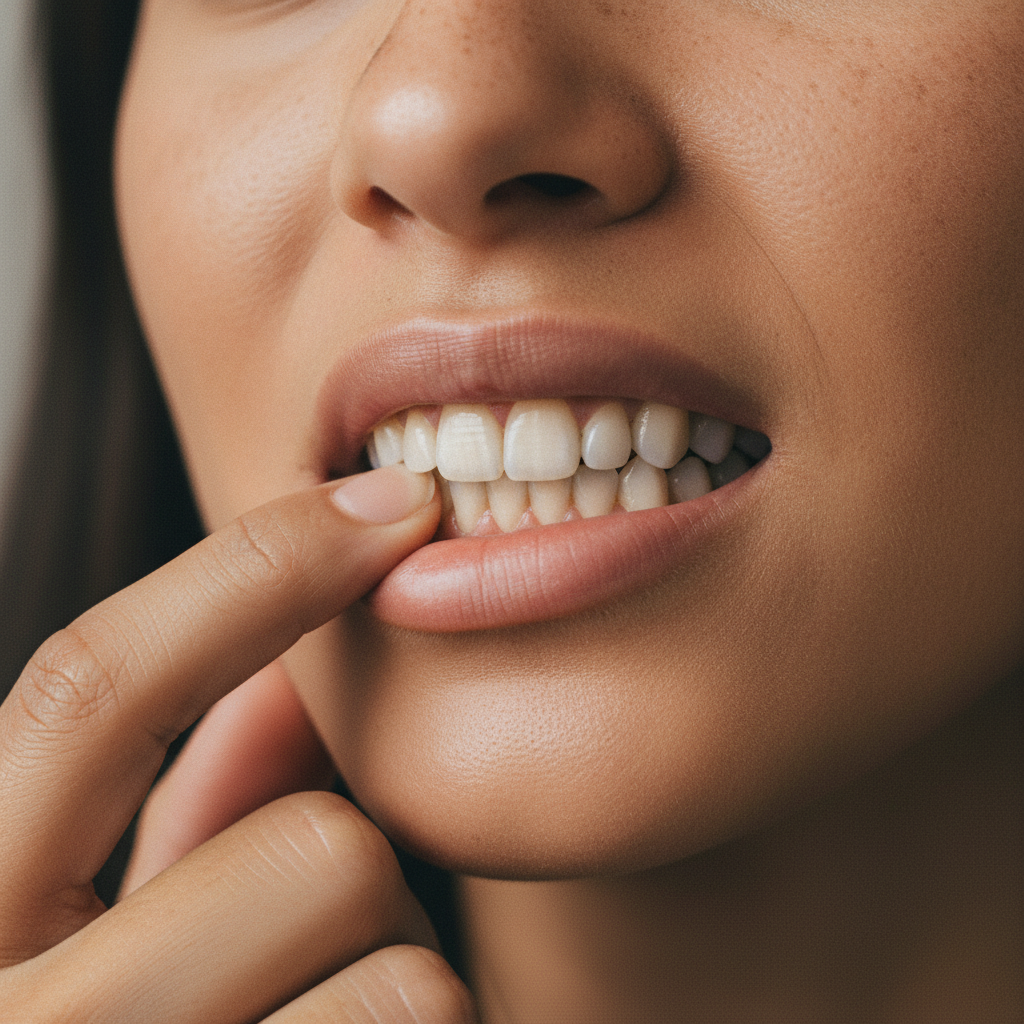
All-on-4 / All-on-6 — full-arch restoration across two daycase visits
All-on-4 is a full-arch fixed prosthesis supported by four strategically placed dental implants per jaw. Published 10-year cumulative survival of the prosthesis approaches 94–98% across studies tracking the original Maló protocol. The decisions that matter are (1) whether your bone supports four implants or whether you need a five-, six-implant, or zygomatic alternative, (2) the temporary-vs-definitive prosthesis sequence, and (3) the long-term maintenance plan.
At HEC we perform All-on-4 across two daycase visits — implant placement and immediate temporary on day 1, definitive prosthesis fitting at month 3. No inpatient stay at either visit.
What it is — and what it isn't
All-on-4 is a complete dental rehabilitation protocol developed in the 1990s by Paulo Maló in collaboration with Nobel Biocare, building on the Brånemark osseointegration discoveries of the 1960s. The protocol replaces a full arch of teeth (10–14 functional teeth) on four implants per jaw — typically two implants placed axially in the anterior region and two implants placed at a tilted angle in the posterior region to bypass the maxillary sinus or the inferior alveolar nerve.
It is not a substitute for individual dental implants where the patient still has natural teeth that could be saved. All-on-4 is appropriate when the entire arch is failing — severe periodontal disease, terminal dentition, complete edentulism. Patients with isolated tooth loss are usually better served by single-tooth implants; patients with most of their natural teeth intact are usually better served by less aggressive restorative work.
A clinic that recommends All-on-4 for every patient with a dental complaint is over-prescribing. We say no to All-on-4 when the case does not warrant extraction of healthy teeth, and we say so in writing.
When all-on-4 is the right answer
| Patient situation | All-on-4 suitability |
|---|---|
| Complete edentulism (full denture) | Often ideal — restores fixed function, eliminates denture instability |
| Terminal dentition (most teeth failing) | Usually appropriate — replaces functional and aesthetic capacity |
| Severe periodontal disease with advanced bone loss | Often appropriate; sometimes requires zygomatic alternative |
| Mostly natural teeth with one or two failing teeth | Usually not appropriate — extraction of healthy teeth is over-treatment |
| Combination of failing + healthy teeth | Segment-by-segment alternatives discussed first (single implants, bridges, partial dentures) |
Variants — All-on-4 vs All-on-6 vs zygomatic
| Variant | Implants per arch | Best suited to |
|---|---|---|
| All-on-4 | 4 standard (2 axial anterior, 2 tilted posterior) | Standard cases with adequate anterior bone |
| All-on-6 | 6 standard distributed across the arch | Long arches; cases where extra implant support is clinically preferred for load distribution |
| All-on-8 | 8 standard | Maxillary cases with adequate bone and patient preference |
| All-on-4 with zygomatic implants | 2 standard + 2 zygomatic (anchored in cheek bone) | Severe maxillary bone loss where standard-length implants are not possible |
| Zygomatic quad | 4 zygomatic | Extreme maxillary bone loss — specialist-only |
The plan you receive specifies which variant applies and why.
Same-day-teeth — what is and is not delivered on day one
The "same-day teeth" phrase common in All-on-4 marketing refers to temporary prosthesis placement on the day of implant surgery. The temporary is a fixed acrylic bridge attached to the implants, allowing you to leave the clinic with a functional smile the same day. It is not the definitive prosthesis. The definitive — usually a zirconia bridge — is fabricated after the implants have osseointegrated, typically at 3–4 months post-surgery.
This sequence matters because:
1. The temporary is functional but cosmetically and structurally less refined than the definitive
2. The definitive requires a second visit (or shipping to a local dentist for placement)
Our plan says which the patient is receiving in the initial trip and how the definitive is sequenced.
Two-visit choreography
Visit 1 — Implant placement + immediate temporary (day 1):
| Time | What happens |
|---|---|
| 08:30 | CBCT, blood-pressure check, anti-emetic (sedation patients) |
| 09:30 | Implant placement under local anaesthesia ± IV sedation (3–4 hours) |
| 14:00 | Impressions for temporary prosthesis |
| 16:30 | Temporary acrylic bridge fitted |
| 18:00 | Discharge with antibiotics, analgesics, soft-diet instructions |
Days 2–4: soft diet, post-op review at 48 hours, departure on day 5–6.
Visit 2 — Definitive prosthesis (month 3):
| Time | What happens |
|---|---|
| 09:00 | Implant osseointegration check via Periotest or RFA |
| 10:00 | Final impressions / digital scan for definitive bridge |
| 13:00 | Bridge milling on-site (zirconia) |
| 16:00 | Try-in and final fitting |
| 17:00 | Discharge |
A second short trip is required for the definitive — the plan accounts for this in scheduling.
Who is a candidate
- Adequate anterior bone for axial implant placement (CBCT-confirmed)
- Posterior bone allowing tilted implant placement (or zygomatic alternative)
- Healthy gums (periodontitis treated before placement)
- No uncontrolled diabetes, no recent IV bisphosphonates
- Non-smoker or willing to stop 4 weeks pre-op + 8 weeks post-op
- Realistic acceptance of the two-visit sequence
Recovery
Day 0–2 — Significant swelling, bruising around the jaw and cheek. Cold compresses, analgesics, anti-inflammatories. Liquid and soft diet.
Day 3–7 — Swelling subsides. Soft diet continues; the temporary prosthesis is fully functional for soft chewing.
Week 2–4 — Most patients return to normal social activity. Diet expanded gradually.
Month 3 — Osseointegration check. Definitive prosthesis fitted (second visit).
Year 1+ — Annual hygienist maintenance; occlusion check.
What it is not
All-on-4 is not a single-visit definitive. The temporary you leave with on day 1 is replaced 3 months later. We discuss this transparently because the marketing in some clinics conflates the temporary with the definitive, leading to false expectations.
It is not the right answer for partial dentition. The All-on-4 indication is full-arch failure. For one or two failing teeth amid healthy neighbours, single-tooth implants are appropriate.
The package
The locked two-visit package: pre-op CBCT, implant placement (4–6 implants per arch per variant), temporary acrylic bridge, post-op review visits during the first trip, definitive zirconia bridge at the second visit (3 months later), all medications, two hotel nights per visit, transfers, translator, and 12 months of video follow-up. Both visits in one number.